Masterpiece
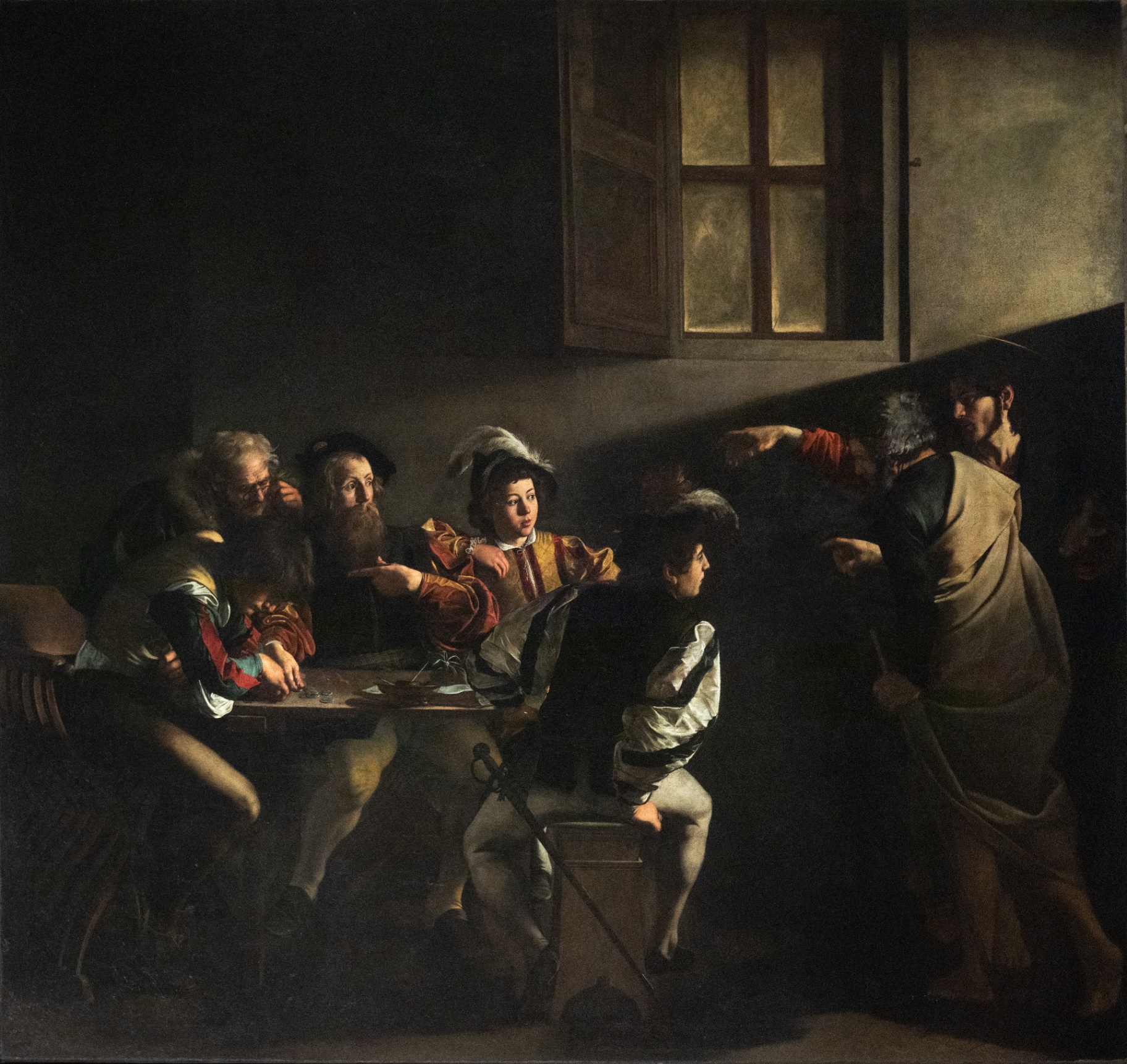
The Calling of St. Matthew
Details
About
The painting that made Caravaggio famous overnight. A shaft of divine light cuts across a shadowed tax office; Christ points at Matthew, and Matthew points at himself with an incredulous 'Me?'. The Christ figure is barely visible in shadow â the light does the theology. Note the anachronistic 17th-century clothes on the tax collectors: Caravaggio placed the miracle in a contemporary Roman tavern. Bring a â¬1 coin for the light box on the wall â the chapel is otherwise almost black.
The full story
Technical details
- Medium
- Oil on canvas
- Dimensions
- 322 × 340 cm
- Date
- 1599–1600
- Commissioned by
- The executors of Cardinal Matteo Contarelli
- Location
- Contarelli Chapel, San Luigi dei Francesi, Rome
Historical context
Commissioned by the estate of the French Cardinal Matthieu Cointerel (Matteo Contarelli), this masterpiece was intended to decorate his burial chapel in the church of San Luigi dei Francesi. By 1599, the chapel had remained unfinished for decades; the young Caravaggio was awarded the contract through the influence of his patron, Cardinal Francesco Maria del Monte. Rome at the turn of the 17th century was the epicenter of the Counter-Reformation, a period where the Catholic Church sought to use art as a powerful tool for spiritual reawakening and mass communication. Caravaggio’s arrival on the public stage with this commission signaled a seismic shift in European art. Breaking away from the artificiality of Mannerism, he brought the divine down to the level of the street, utilizing gritty naturalism and dramatic lighting to make biblical narratives instantly relatable to a Roman public accustomed to seeing tax collectors and tavern scenes in their daily lives. This painting represents the moment the sacred pierces the mundane.
Symbolism & iconography
- The Hand of Christ: A direct visual reference to Michelangelo's 'Creation of Adam,' symbolizing that Christ's call is a new act of creation.
- The Two Figures on the Left: They remain focused on their money, representing 'blindness' to spiritual truth and the choice to remain in the dark.
- The Sword: Worn by the young man with his back to us, it signifies his status as a 'bravaccio' (a street thug or mercenary), contrasting worldly violence with divine peace.
- The Void: The large dark space above the figures emphasizes the weight of the shadows and creates a theatrical stage where the light serves as the primary protagonist.
What to look for in person
- The painting is located on the left wall of the chapel; stand slightly to the right of the altar to see how the painted light aligns with the actual window of the chapel.
- Bring a 1-Euro 또는 2-Euro coin to operate the light box; the chapel is very dark, and the painting is best seen under the timed illumination.
- Look closely at the man peering through glasses; he represents the spiritual blindness of those who can only see the material world.
- Observe the feet of the men at the table; they are dressed in the flamboyant, striped silks of Rome’s 17th-century street culture, not biblical robes.
Fun facts
- X-rays of the canvas reveal that Caravaggio originally painted Christ without the figure of St. Peter in front of him; Peter was added later to represent the mediation of the Church between the divine and the world.
- The window shown in the painting is a 'blind' window (impannata), covered with oilcloth rather than glass, a common feature in poor Roman dwellings of the period.
- Caravaggio was only 28 years old when he received this commission, his first major public work in Rome.
- Critics of the time were scandalized by the bare feet of the apostles and the gritty, 'low-life' setting for such a holy subject.
Rating
Notes
Loading…