Masterpiece
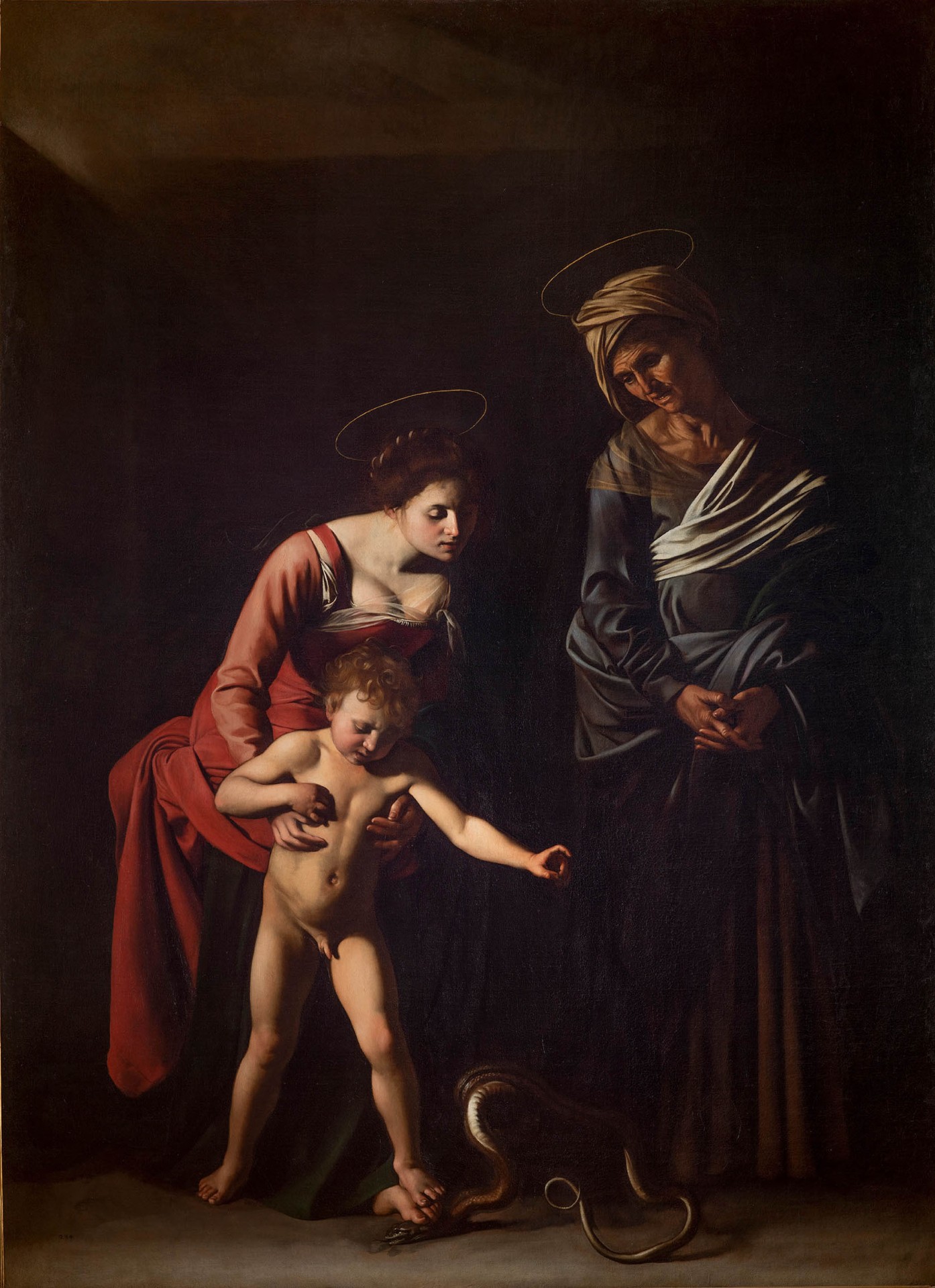
Madonna and Child with St. Anne
Details
Artist
Caravaggio · Baroque
About
Commissioned for St. Peter's and rejected almost immediately â the Virgin's plunging neckline, the naked toddler Christ, and the wrinkled peasant Anne were too much for the Curia. Cardinal Scipione Borghese swooped in and bought it cheap. The mother and son together crush the serpent (heresy) under bare feet â a piece of Counter-Reformation theology delivered with brothel-scene lighting.
The full story
Technical details
- Medium
- Oil on canvas
- Dimensions
- 292 × 211 cm
- Date
- 1605–1606
- Commissioned by
- Archconfraternity of the Papal Grooms (Parafrenieri)
- Location
- Galleria Borghese, Room VIII
Historical context
Commissioned in late 1605 for the altar of the Archconfraternity of the Papal Grooms (Parafrenieri) in St. Peter’s Basilica, this massive canvas represents a pivot point in the Roman Baroque. At the time, Rome was a battlefield of Catholic dogma, as the Church sought to use art as a weapon of the Counter-Reformation to assert the sanctity of Mary and the necessity of good works. However, Caravaggio’s uncompromising realism often clashed with the very authorities he served. The painting hung in the world’s most prestigious church for only two days—some say a month—before it was unceremoniously removed. The official reasons remain a subject of debate, citing everything from the indecorous depiction of the Virgin to the "plebeian" nature of the figures. Cardinal Scipione Borghese, a man of immense power and questionable ethics, pounced on the opportunity to acquire the rejected masterpiece for his private collection, where it has remained a cornerstone of the Borghese gallery for centuries.
Symbolism & iconography
- The Serpent: A direct symbol of Original Sin and the Devil, depicted realistically as a common snake found in the Roman countryside.
- The Bare Feet: A sign of humility and the 'Apostolic poverty' favored by the radical religious movements of the time.
- The Red Dress: While traditionally Mary wears blue, the deep red here evokes the blood of the Passion and her role in Christ’s sacrifice.
- The Wrinkled Face of St. Anne: Symbolizes the Old Testament or the Synagogue, fading into the background as the New Covenant (Christ) takes center stage.
What to look for in person
- Step to the far right of the canvas to see how the serpent’s body seems to recede into the dark void.
- Look closely at the Christ Child’s foot; Caravaggio depicts the dirt under the toenails, a hallmark of his 'low-life' realism.
- Observe the texture of St. Anne’s skin; the artist used thin glazes to create the translucent, papery quality of elderly flesh.
- Notice the single source of light coming from the top left, which mimics the real-world light that would have entered the original chapel.
Fun facts
- The painting was only displayed in St. Peter's for a few days before being rejected for 'indecency.'
- The model for Mary was Lena, Caravaggio’s mistress and a well-known Roman prostitute, which fueled the scandal surrounding the work.
- Cardinal Scipione Borghese, the Pope's nephew, likely influenced the rejection so he could buy the painting for his own collection at a bargain price.
- Caravaggio creates a sense of three-dimensional space by having the serpent’s tail appear to coil out beyond the edge of the canvas toward the viewer.
Rating
Notes
Loading…