Masterpiece
Triumph of Divine Providence (ceiling)
Details
About
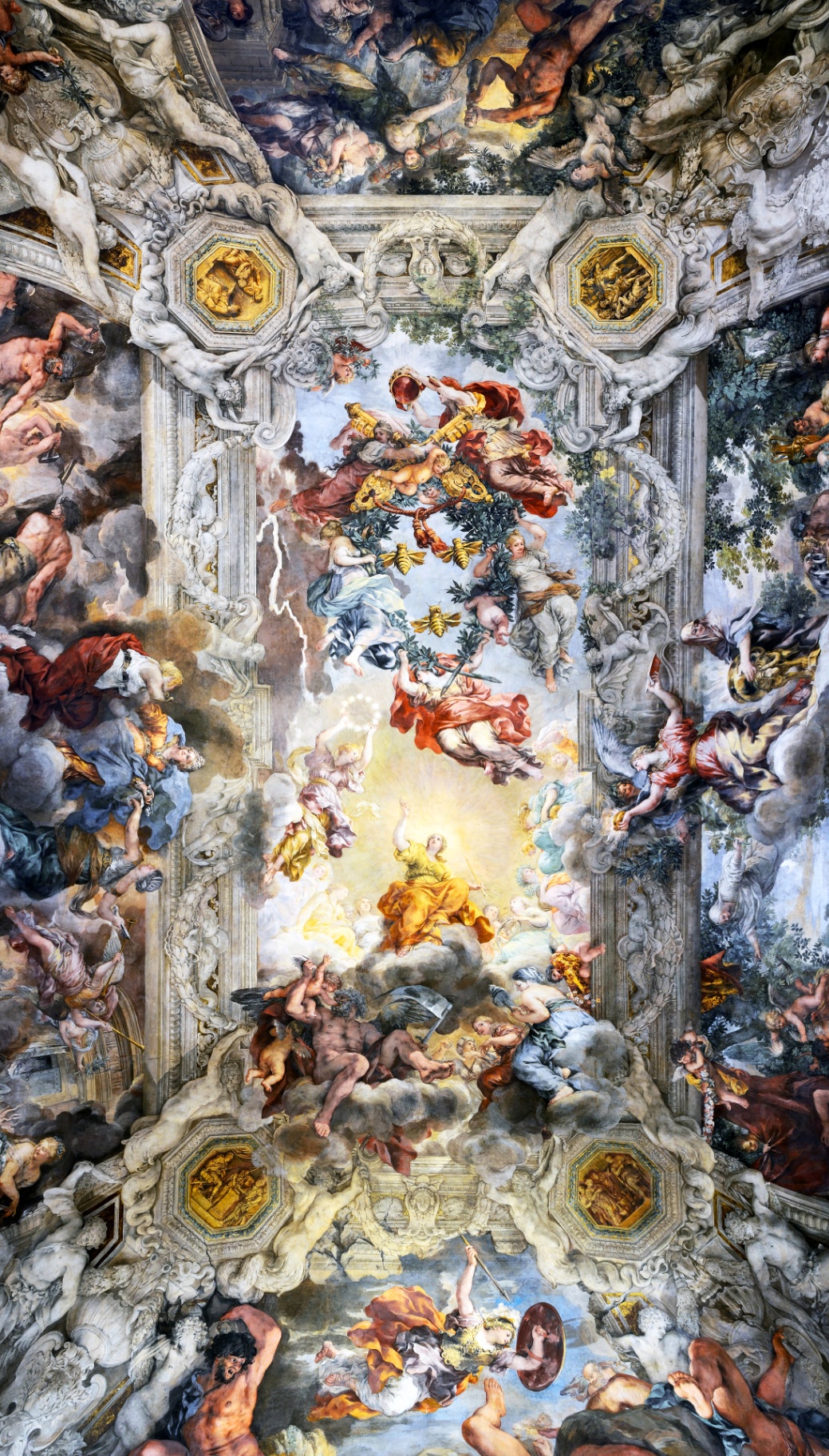
Pietro da Cortona's ceiling is Baroque bombast at its most operatic: a massive illusionistic sky opens above the Grand Salon and figures spill over the painted architecture, refusing to stay inside their frames. The subject is a piece of pure Barberini propaganda â Divine Providence crowning the Barberini bees (the family emblem) with the papal tiara and keys, celebrating Urban VIII's election. Lie on the floor if you can. Cortona invented a whole new grammar for ceiling painting here; it's the direct ancestor of every 18th-century palace ceiling in Europe.
The full story
Technical details
- Medium
- Fresco
- Dimensions
- 1400 × 2400 cm (approximate)
- Date
- 1632–1639
- Commissioned by
- Pope Urban VIII (Maffeo Barberini)
- Location
- Grand Salon, Palazzo Barberini, Rome
Historical context
Commissioned by Pope Urban VIII (Maffeo Barberini), this monumental fresco was created during the height of the Roman Baroque between 1632 and 1639. It serves as the ultimate piece of family propaganda, designed to celebrate the rise of the Barberini clan and legitimize their claim to both spiritual and temporal power. At the time, Rome was the epicenter of the Counter-Reformation, and the Papacy used art as a primary tool to project an image of divine authority and triumph over heresy. Pietro da Cortona, a favorite of the Barberini, was tasked with transforming the massive ceiling of the Grand Salon into a gateway to heaven. This was an era of intense theatricality and architectural innovation; the palace itself was a collaboration between the greatest minds of the age, including Bernini and Borromini. Cortona’s work here represents the transition from the structured classicism of the previous generation to the explosive, boundless energy of the High Baroque interior.
Symbolism & iconography
- The Three Bees: The central heraldic symbol of the Barberini family, representing industriousness, honey-sweat eloquence, and divine favor.
- Divine Providence: Dressed in gold and holding a scepter, she represents the divine will of God manifesting through the Papacy.
- The Laurel Wreath: A classic symbol of immortality and victory, here suggesting that the Barberini name will live forever in the annals of history.
- The Keys of St. Peter: Held by female figures near the bees, they signify the family's control over the Papal office and the gates of heaven.
- The Falling Giants: Located in the corners, they represent the defeat of heresy and the triumph of the Church over those who rebel against divine order.
What to look for in person
- Stand directly in the center of the room first to experience the full illusion of the 'quadratura' architecture aligning with the room's walls.
- Move to the corners of the room to see how Cortona foreshortened the bodies of the falling giants; they appear to be tumbling out of the ceiling and into the room with you.
- Bring a small mirror or use your phone's front camera to look at the ceiling comfortably; the sheer density of detail can cause significant neck strain if you look up for too long.
- Pay attention to the transition between the painted white 'stucco' frames and the sky; the way the figures overlap the frame is the key to the painting's 3D effect.
Fun facts
- Despite its massive scale, Cortona completed the majority of the work himself, though he took a break in 1637 to travel to Florence, which influenced the Venetian richness of the colors found in the final sections.
- The three bees are arranged in a formation that mimics the fleur-de-lis, a subtle nod to the Barberini family's close political ties with the French Monarchy.
- In the corners of the ceiling, the figures of the giants being struck down are actually a warning to the enemies of the Pope; Urban VIII was known for his ruthless consolidation of power.
- The fresco survived remarkably well through the centuries, largely because the Barberini family maintained the palace as a private residence until the 20th century.
Rating
Notes
Loading…